
Growing Tips For
Echeveria Agavoides/Echeveria Pachyphytum / Sedum/Graptopetalum
The Secret to Vibrant Colours :
Colour Development :
Anthocyanins play a key role in giving succulents their vibrant hues. When exposed to strong sunlight, succulents produce anthocyanins to protect their leaves from damage—similar to how sunscreen works for us. The more intense the sunlight, the higher the concentration of anthocyanins, resulting in richer colours. In low light conditions, succulents break down anthocyanins to allow more sunlight in, leading to a loss of colour. If you want colourful succulents, ensure they receive ample sunlight.
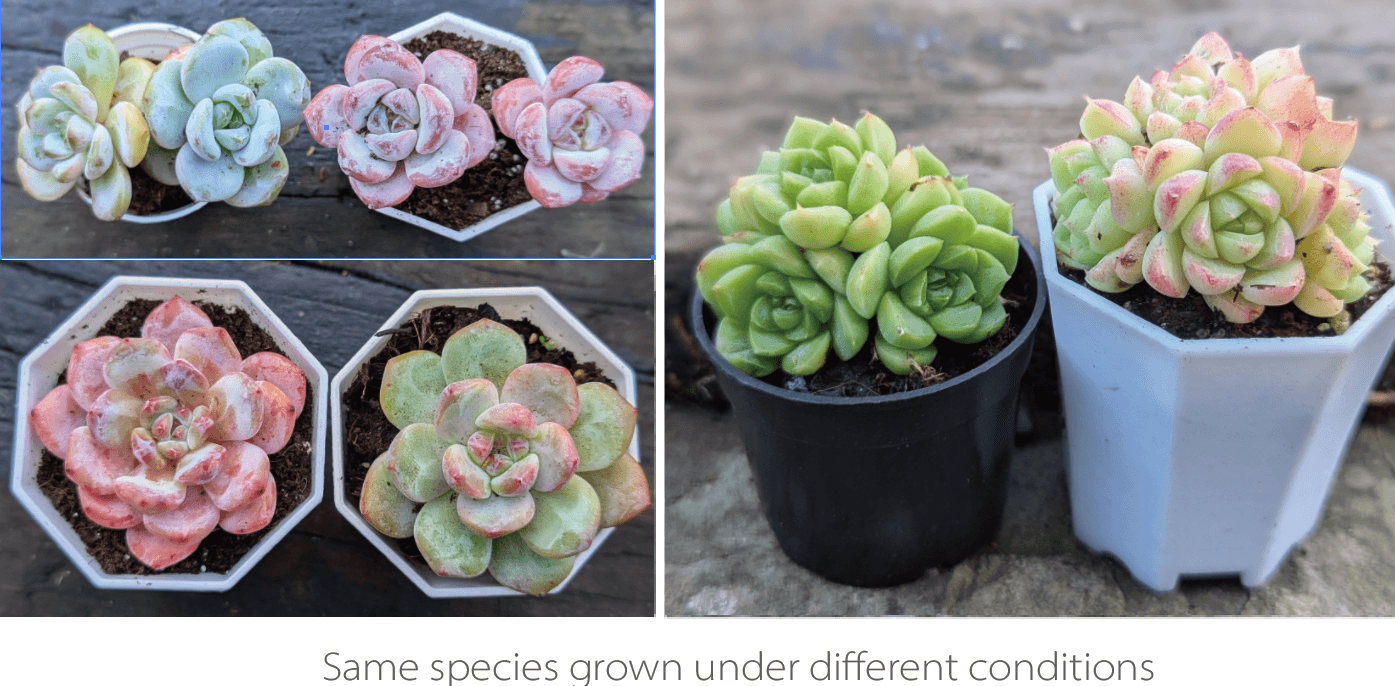
Same species grown under different conditions
Green Growth :
Chlorophyll helps plants absorb sunlight for energy. If you prefer lush, green succulents that grow quickly, maintaining moist (but not overly wet) soil will support chlorophyll production. On the other hand, a lack of water prevents the absorption of nitrogen, hindering chlorophyll synthesis and slowing growth. Succulents grown outdoors in direct sunlight tend to have deeper colours compared to those grown indoors under artificial lights.
Dormancy Period
Succulents have different dormancy periods depending on the species—some rest in summer, others in winter, and some in both seasons. Observing your plants or researching specific species can help you determine their dormancy period. During dormancy, succulents require minimal water. I rarely water mine at all during this time. If you grow them indoors, where temperatures are stable, they may not enter dormancy and can be watered as usual.
Fertilising Your Succulents
- •Nitrogen Fertiliser: Encourages leaf and branch growth and aids chlorophyll synthesis. (However, it can cause succulents to turn greener and grow faster at the expense of vibrant colours.)
- •Phosphate Fertiliser: Supports flowering and enhances anthocyanin production for richer colours.
- •Potash Fertiliser: Strengthens roots and rhizomes, promoting overall plant health.